
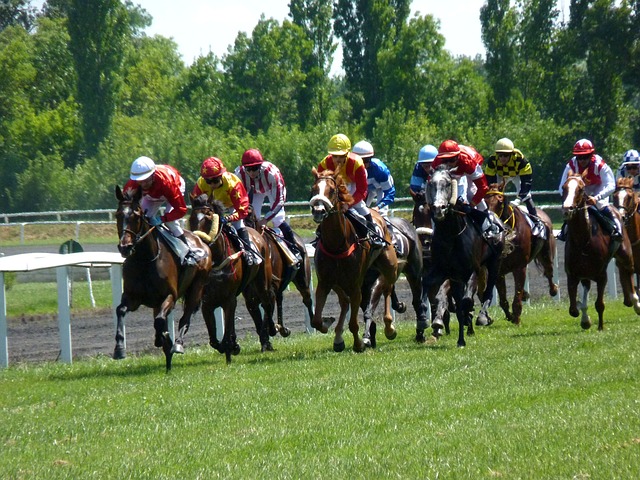
 Few races in Britain carry quite the weight of the Gold Cup, which was first run in 1807 and remains the centrepiece of Thursday at Royal Ascot. Racing purists turn up for a genuine test of stamina, while plenty of others are drawn by two centuries of history and the royal connection, or simply by the chance to catch sight of a horse they have been reading about for months.
On paper it is a Group 1 for horses aged four and older, run over two miles, three furlongs and 210 yards, which works out at roughly two and a half miles and is a serious trip at racing pace. Any horse short of stamina tends to get found out, so specialist stayers dominate, and the race also opens Britain’s Stayers’ Triple Crown, with Goodwood and Doncaster hosting the other two legs later in the year.
Royal beginnings
The story starts in 1807, when King George III and Queen Charlotte were among the spectators and a three-year-old named Master Jackey took the first running along with 100 guineas in prize money. Three-year-olds were eligible back then, although these days the race is limited to four-year-olds and upwards.
Then there is 1844, when Tsar Nicholas I of Russia attended the race during a state visit to England. The winner that year did not even have a name yet, so he was christened The Emperor as a nod to the royal guest, and the Tsar returned the compliment with a new trophy that briefly gave the race the title of the Emperor’s Plate. The Emperor, as it happens, won again in 1845, and much later, during both world wars, the race was staged at Newmarket for several years.
The modern race
Money has always followed the Gold Cup. Betting on the race opens months ahead in what the trade calls the ante-post market, and any spring outing by a fancied stayer gets prices moving, since one good run can reshape the horse racing odds for Ascot very quickly while a poor one can just as easily send the favourite drifting. Proven champions tend to attract the biggest support. Yeats, for example, started at 6/4 as he chased a fourth win in 2009, and Scandinavia went off the 11/8 favourite in 2026, with one firm reporting a £120,000 bet on him at 5/2. Short prices guarantee nothing in this race, though, so anyone having a flutter is wise to treat it as part of the day out and settle on a budget first.
The trophy is a bit unusual too, because winners do not hand it back the following year. Only three Royal Ascot prizes work this way, the Gold Cup, the Royal Hunt Cup and the Queen’s Vase, and in each case the cup goes home with the owner for keeps. It is the kind of old custom that makes Royal Ascot feel quite unlike an ordinary day at the races.
The horses that made it famous
Sagaro was the first horse to win it three times, starting a run in 1975 that he extended with victories in 1976 and 1977. François Boutin trained him in France and Lester Piggott rode him on each occasion, adding to a much bigger haul for the jockey, who won the race 11 times between his first success on Zarathustra in 1957 and his last on Ardross in 1982. No jockey has won it more often.
Yeats raised the bar again. Trained at Ballydoyle by Aidan O’Brien, he kept turning up and winning for four Junes in a row from 2006 to 2009, something no other horse has managed, with Kieren Fallon on board the first time, Mick Kinane the second and Johnny Murtagh for the final two.
Few Gold Cups have stirred a crowd like the 2013 edition, when Estimate carried the Queen’s colours with Ryan Moore riding for trainer Sir Michael Stoute and held on by a neck from Simenon. No reigning monarch had won the race before, and since it was usually the Queen who handed over the trophy, she found herself on the other side of the presentation this time, smiling in a way the public rarely saw.
Stradivarius was the next big name and soon became a crowd favourite in his own right. Trained by John Gosden, he gave Frankie Dettori a Gold Cup in 2018 and repeated the feat in each of the following two years, so that by 2020 he had matched Sagaro’s three wins. The last of those came by ten lengths, and in 2019 he had also gone on to win at Goodwood and Doncaster, completing the Stayers’ Triple Crown.
The Gold Cup today
The 2026 edition was about as tight as they come. For most of the final furlong it seemed that last year’s winner, Trawlerman, would hold on, until Scandinavia and Ryan Moore caught him close to the line. Aidan O’Brien had two reasons to celebrate, as the win brought him a tenth Gold Cup and, on the same afternoon, made him the first trainer in history to reach 100 winners at Royal Ascot.
The 2027 renewal is scheduled for Thursday 17 June, the third day of a Royal Meeting that opens on Tuesday 15 June and closes on Saturday 19 June. Ladies’ Day tickets in particular tend to go early, so leaving it late is, fittingly, a gamble in itself, and whichever horse wins will join a roll of honour that began with Master Jackey in 1807.